Getting Office Cleaning Right When Your Team Works Hybrid

Posted by servicemaster on October 22, 2026

Getting Office Cleaning Right When Your Team Works Hybrid

For many businesses across Manchester, hybrid working has become the norm, with teams coming into the office on set days and working from home the rest of the week. The way offices are used has changed, but the way they’re cleaned often hasn’t kept pace. Some businesses are still working to a schedule designed for a full office, while others have cut their cleaning hours further than the space really needs.

In this guide, we look at how hybrid working affects your office, why fewer office days shouldn’t mean less cleaning and how to plan a schedule that keeps your workplace ready every time your team comes in.

How Hybrid Working Has Changed the Way Offices Are Used

The biggest change hybrid working has brought is not that offices are used less, but that they’re used differently. Many now have a handful of busy days followed by quieter ones, with teams often agreeing to come in on the same days, so the office can go from almost empty to full capacity overnight.

The days spent in the office also tend to centre on meetings, training and time with clients, meaning more people gathering in meeting rooms, kitchens and breakout areas at once. Many businesses have moved to hot desking too, working in a similar way to  shared office spaces, so desks, keyboards and phones are shared between more people than before. All of this affects how quickly an office gets dirty and where cleaning effort is needed most.

Why Fewer Office Days Shouldn’t Mean Less Cleaning

When a team cuts its office days, it can seem logical to cut cleaning hours by the same amount. In practice, the same number of people often pass through the space, just across fewer days, so the pressure on it is concentrated rather than reduced.

On a busy office day, kitchens fill up with mugs and spills, bins fill faster and washrooms are used far more heavily. Shared desks add another layer, as keyboards, mice and desk surfaces pass germs easily from one person to the next and nobody takes ownership of keeping them clean. Meanwhile, dust, marks on floors and grime in less visible areas still build up regardless of how often the office is occupied.

That’s why we recommend planning cleaning around how heavily the office is used on the days it’s open, rather than simply the number of days it’s open.

The Risks of Cutting Cleaning Hours Too Far

A few hours of cleaning a week only stretches so far. In that time, a cleaner can usually empty the bins, vacuum and wipe down the most obvious surfaces, but there’s rarely time to clean washrooms and kitchens thoroughly or sanitise shared desks. Over time, those missed jobs start to show, and while the office may look acceptable at a glance, staff and visitors notice the details.

This matters more than ever when many businesses are encouraging their teams back into the office, and when the office is often where clients are welcomed. There’s a cost implication too, as an office that’s been allowed to slip often needs a far more intensive clean to restore it, which is why consistent cleaning matters more than deep cleaning alone.

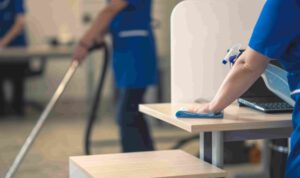
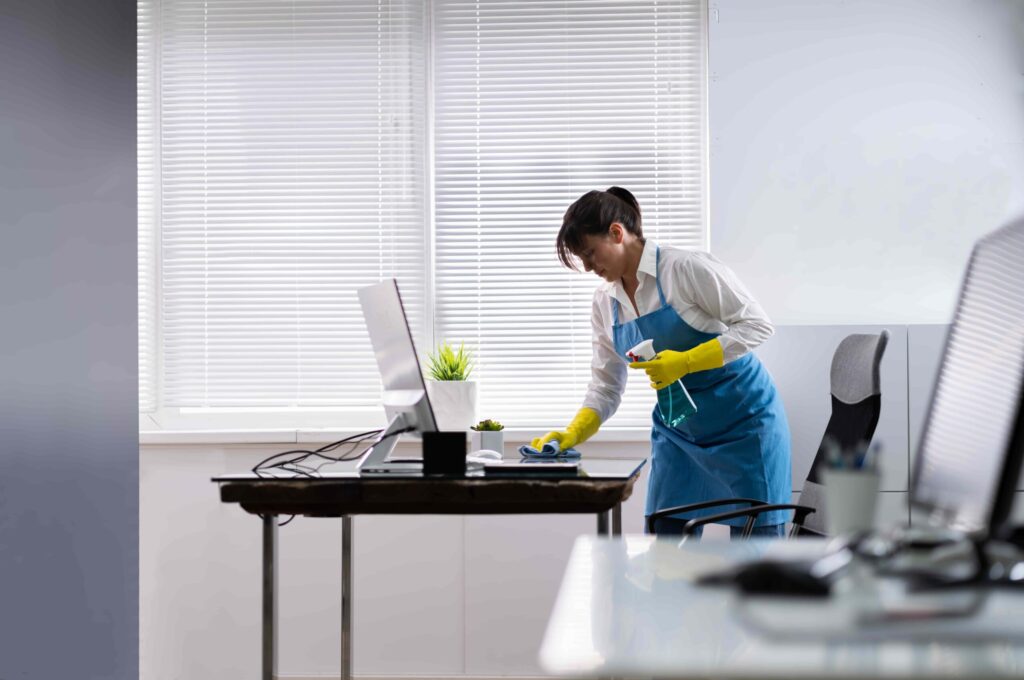
deep cleaning of office desks by professional cleaners

Matching Your Cleaning Schedule to Your Office Days

For most hybrid teams, the most effective approach is to clean on every day the office is occupied. Rather than spreading a small number of hours thinly across the week, cleaning is planned around the days your team is actually in.

Cleaning in the evening after a busy day means the office is fresh when people arrive the next morning, while early morning cleans suit offices used into the evening. Because office days often change as teams grow or hybrid policies are reviewed, we also review cleaning schedules with our clients regularly to make sure they still fit.
Areas That Need Extra Attention in a Hybrid Office

Some parts of the office feel the effects of hybrid working more than others.

Shared Desks and Hot Desks – With several people using the same workstation each week, desks, keyboards, mice, phones and chair arms need cleaning and sanitising regularly to reduce the spread of germs between colleagues.

Kitchens and Breakout Areas – Worktops, sinks, fridges, microwaves and kettles all take heavy use on busy office days and need cleaning afterwards to stay hygienic.

Meeting Rooms – With more office time spent in meetings, tables, screens and whiteboards should be cleaned regularly and rooms left ready for the next booking.

Washrooms – Washrooms are one of the first places people notice when standards slip, so they need thorough cleaning and restocking after busy days.

High Contact Points – Door handles, light switches, lift buttons and shared printers are touched by almost everyone, making them one of the simplest areas to focus on for a more hygienic workplace.

When Daily Cleaning Is Still the Right Choice

While many hybrid offices benefit from cleaning matched to their office days, daily cleaning remains the best option for a large number of businesses. If your office is used on most days of the week, even by different people on different days, daily contract cleaning is the most reliable way to keep standards consistent.

It also suits larger offices and teams, businesses that regularly welcome clients, such as law firms, and sectors where hygiene and compliance requirements make daily cleaning essential, including healthcare and education.

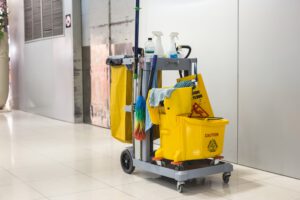
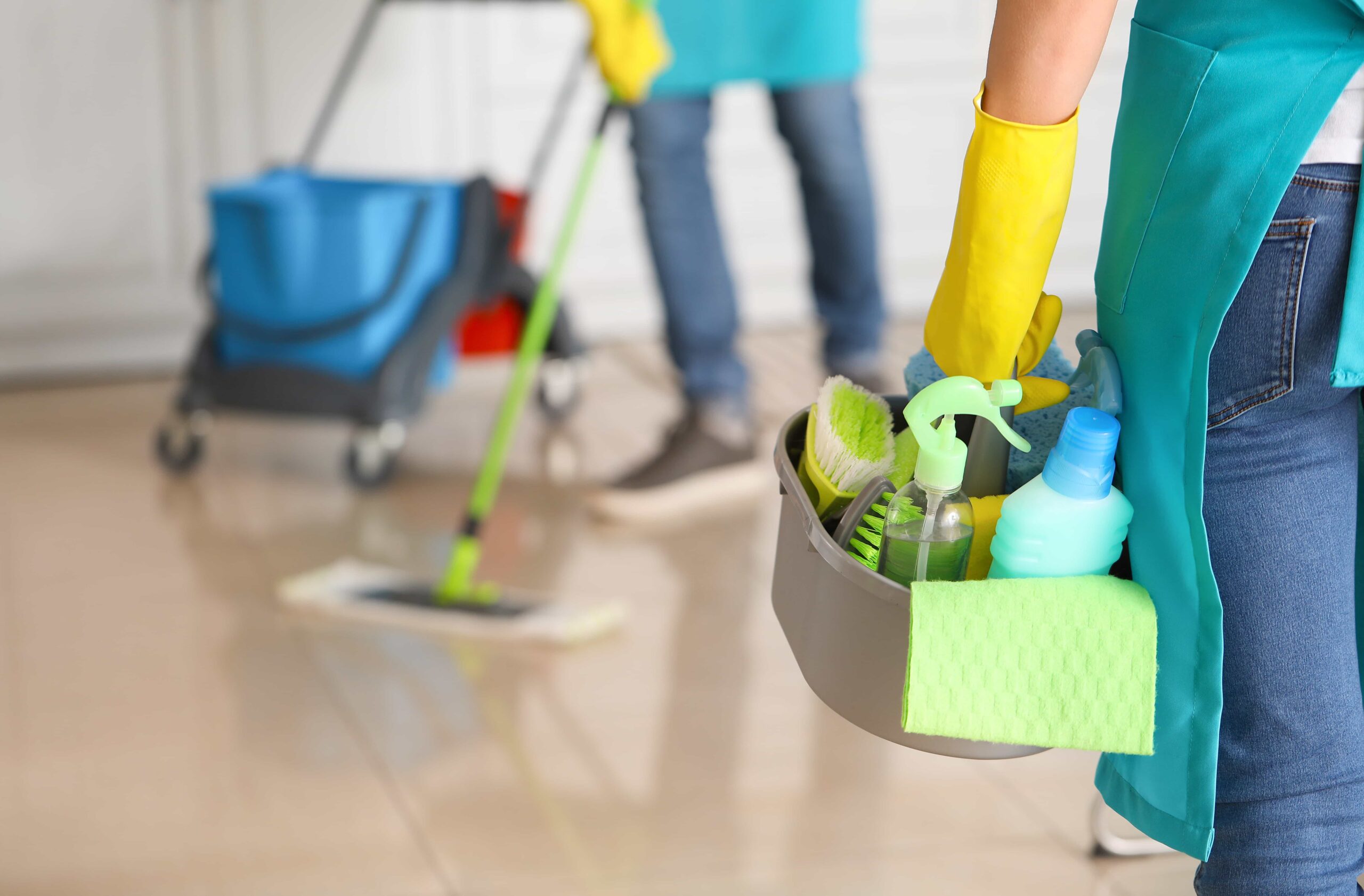
Cleaning supplies and equipment for commercial cleaning

Cleaning Hybrid Offices Across Greater Manchester

At ServiceMaster Manchester, we provide daily office cleaning for businesses across Greater Manchester, including schedules planned around hybrid working. We take the time to understand how your office is used and recommend a schedule that keeps it hygienic and welcoming on every office day.

To review your office cleaning, call us on 0161 905 3000 or request a free quote.

1