Keeping Warehouse Staff Safe Through Proper Cleaning Standards

Posted by servicemaster on September 17, 2026

Keeping Warehouse Staff Safe Through Proper Cleaning Standards

Warehouses are demanding environments. Forklifts move constantly, stock gets shifted at pace, and staff are on their feet for hours at a time. In spaces like this, cleaning is not just about appearances. It plays a direct role in keeping people safe.

At ServiceMaster Manchester, we create cleaning contracts for warehouse and distribution sites where the link between cleaning standards and staff safety is impossible to ignore.

 A build-up of dust in the wrong place, a spill left too long, or a blocked walkway can turn a routine shift into an accident. Getting cleaning right is one of the simplest ways to reduce that risk.

Slips, Trips and Falls Start With the Floor

Warehouse floors take a battering. Oil, dust, packaging debris and general wear all build up quickly, and on hard, often uneven surfaces, that build-up becomes a genuine hazard.

Spillages that are not dealt with promptly are one of the most common causes of workplace slips. Add in poor lighting or high foot traffic, and the risk increases further. Regular floor cleaning, along with a clear process for handling spills as soon as they occur, is one of the most effective ways to reduce these incidents.

Dust Is More Than a Housekeeping Issue

In many warehouses, dust is treated as a cosmetic problem rather than a safety one. That is a mistake.

Dust and debris can build up on walkways, machinery, racking and ventilation systems. Beyond the obvious hygiene concerns, this can affect air quality, aggravate respiratory issues among staff, and in some environments contribute to fire risk. 

A proper cleaning schedule that reaches high-level racking, vents and hard-to-access areas, not just the floor, helps keep these risks under control.

Clear Walkways Protect More Than Just Floors

Warehouses rely on clearly defined routes for staff, forklifts and stock movement. When cleaning falls behind, it is often these routes that suffer first, with clutter, packaging waste and stray stock encroaching on space that needs to stay clear.

Keeping walkways, loading areas and machinery access points free from debris is not just good practice. It directly reduces the chance of collisions, obstructed sightlines and rushed manoeuvring around hazards.

Washrooms and Welfare Areas Matter Too

It is easy to focus entirely on the warehouse floor and overlook staff welfare areas, but these spaces matter just as much for safety and wellbeing.

Poorly maintained washrooms and break areas can contribute to the spread of illness, particularly in busy sites where large numbers of staff share the same facilities. Keeping these areas properly cleaned supports both hygiene and staff morale, and reduces the number of sick days linked to preventable illness.

Why a Scheduled Cleaning Programme Works Better Than a Reactive One

Many warehouse cleaning problems only get addressed once something has already gone wrong, whether that is a near miss, a complaint, or a failed inspection. By that point, the risk has already existed for some time.

A structured, scheduled cleaning programme changes that. Routine tasks get carried out consistently rather than being squeezed in when time allows. High-risk areas such as walkways, loading bays and machinery zones receive regular attention, and problems get caught before they turn into incidents.

This kind of consistency is particularly important in warehouses, where the pace of operations means small issues can escalate quickly if they are left unchecked.

The Role of Daily Cleaning in a Fast-Moving Warehouse

In a warehouse environment, dirt and debris do not build up over weeks. They build up over hours. Deliveries come in, packaging gets stripped and discarded, and dust gets kicked up by constant forklift and foot traffic. Without a daily cleaning routine, all of this accumulates fast, and yesterday’s mess becomes today’s hazard.

Daily cleaning is what keeps a warehouse safe between the bigger, more thorough cleans. It covers the basics that matter most for immediate safety: clearing walkways of stray debris, dealing with spills before they are trodden through the site, keeping high-traffic floor areas clear, and making sure bins and waste areas do not overflow into working space.

It also plays a preventative role. Catching a small oil leak, a torn bag of stock, or a build-up of packaging waste on day one stops it from turning into a bigger clean-up job, or a bigger risk, further down the line. Sites that rely solely on periodic deep cleans, without daily attention in between, tend to see standards slip in the gaps, exactly the gaps where accidents are most likely to happen.

For warehouses running multiple shifts or extended hours, this matters even more. A site that looks clean at 8am can look very different by the end of a busy shift. Building daily cleaning into the working day, rather than treating it as an afterthought, keeps standards consistent no matter what time staff walk the floor.

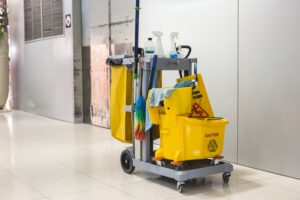
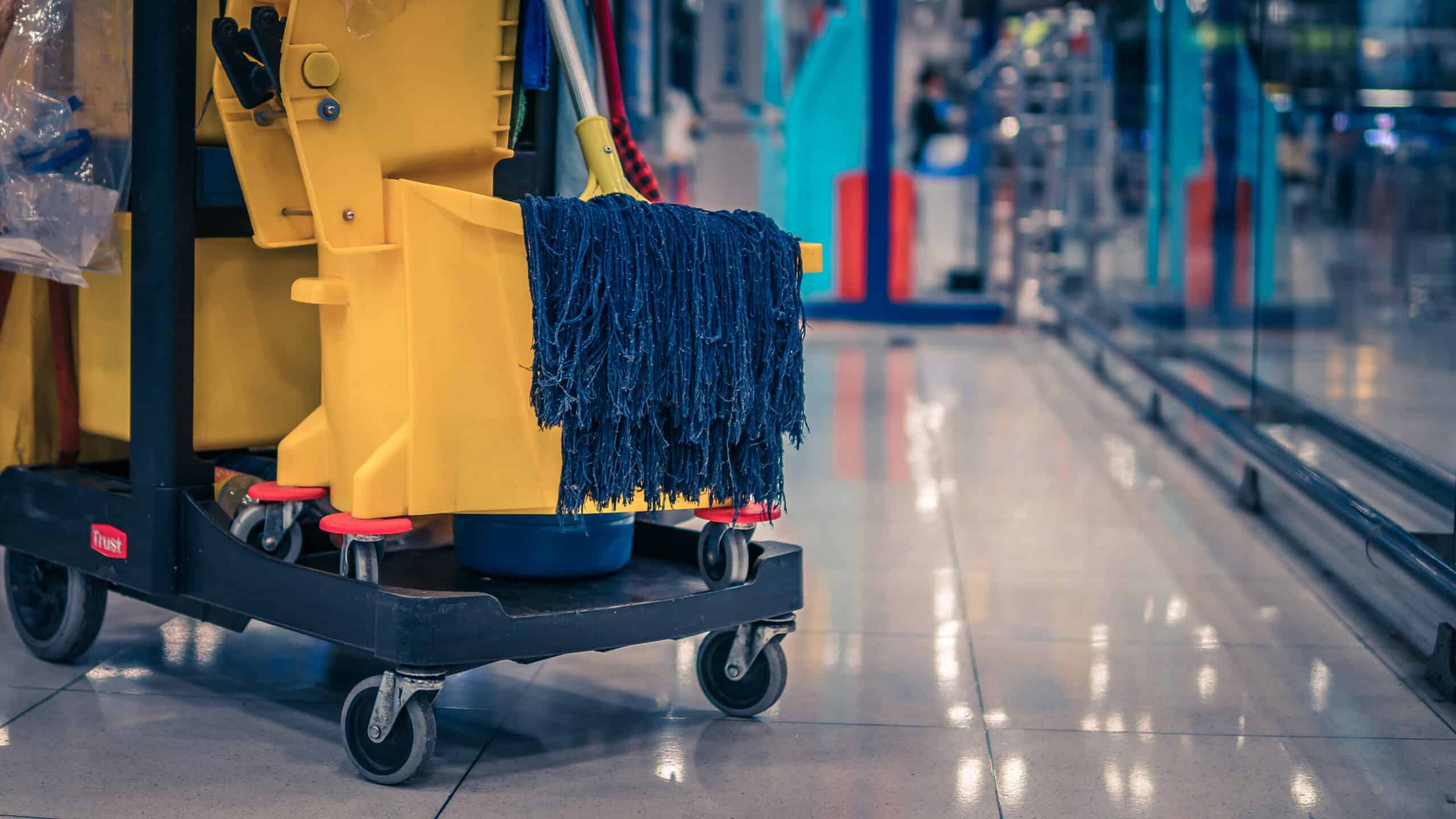
cleaning cart with mop and cleaning tools at a commercial space.

Making Safety Part of the Cleaning Routine

Warehouse safety and warehouse cleanliness are closely connected. Clear floors, clean air, tidy walkways and well-maintained welfare facilities all contribute to an environment where staff can work with fewer preventable risks around them.

Treating cleaning as part of a wider safety strategy, rather than a separate task, is one of the most effective ways for warehouse operators to protect their teams.

Looking for a structured cleaning programme for your warehouse or distribution site?

At ServiceMaster Manchester, we work with warehouse and logistics operators across Greater Manchester to build cleaning programmes around the way their sites actually operate, not a generic checklist. That means scheduled attention to walkways, loading bays, high-level racking and welfare areas, delivered by teams who understand the pace and pressures of a working warehouse.

With over 30 years’ experience and a dedicated account management model for every client, we help operators stay ahead of safety risks rather than reacting to them after the fact.

Request a free, no-obligation quote or call 0161 905 3000 to speak to our team about a cleaning programme built around your site.

1