How Professional Daily Cleaning Reduces Absenteeism in Educational Settings

Posted by platform81 on July 28, 2026

How Professional Daily Cleaning Reduces Absenteeism in Educational Settings

Schools and nurseries are some of the busiest, most densely populated environments around, with large numbers of children and staff sharing classrooms, corridors, washrooms and communal areas every single day. That density makes them a natural breeding ground for germs, and it means cleaning standards have a far bigger impact on attendance than many settings realise.

At ServiceMaster Manchester, we work with a number of schools and education providers, and one theme comes up again and again: absenteeism is rarely just about the illnesses going around. It is also about how well the environment is set up to stop them spreading in the first place.

Why Educational Settings Are Especially Vulnerable

Children and young people are in close contact with each other for hours at a time, often sharing tables, equipment and communal spaces without much thought for hygiene. Add in the natural behaviours of younger children in particular, touching surfaces, sharing toys, less consistent handwashing, and the conditions are set for illness to spread quickly through a class, a year group or an entire site.

Staff are not immune either. Teachers, teaching assistants and support staff are exposed to the same environment all day, and once illness takes hold among pupils, it is rarely long before staff absence follows.

High-Touch Surfaces Are Where Germs Travel Fastest

Door handles, light switches, desks, chairs, shared equipment and washroom fittings are touched by dozens, sometimes hundreds, of different hands every day. Without regular cleaning, these surfaces become one of the main routes through which illness spreads across a school or nursery.

This is particularly true during the colder months, when coughs, colds and stomach bugs circulate more readily and pupils are more likely to touch their face, cover a cough with their hand, then touch a shared surface moments later. A daily cleaning routine that specifically targets these high-touch points, rather than a general tidy-up, makes a measurable difference to how far illness spreads.

Washrooms and Communal Areas Need Daily Attention

Washrooms in schools and nurseries see extremely high use relative to their size, and hygiene standards here have a direct bearing on how quickly illness spreads through a site.

Soap and paper towel availability, floor cleanliness and general upkeep all matter, but so does frequency. A washroom cleaned once at the start of the day will not stay hygienic through a full school day of continuous use. The same applies to dining halls, communal areas and shared play spaces, particularly in early years settings where close contact is unavoidable.

The Case for a Scheduled Approach

It is tempting to treat cleaning as something that ramps up only once illness is already going around a school, extra wipe-downs during a stomach bug outbreak, a deep clean after a bad flu season. The trouble with this approach is that by the time it kicks in, the illness has usually already spread.

A scheduled, daily cleaning programme works differently. High-touch surfaces, washrooms and communal areas receive consistent attention regardless of what is or is not currently going around, which reduces the opportunity for illness to take hold in the first place. Over time, this proactive approach tends to have a far greater impact on attendance than reactive deep cleans triggered after an outbreak has already begun.

The Wider Impact on Attendance

Reduced absenteeism benefits everyone involved. Pupils miss less learning time, staff face less disruption to lesson planning and cover arrangements, and school leaders spend less time managing the knock-on effects of high absence, from catch-up planning to reporting requirements.

It also has a quieter benefit that is easy to overlook: a visibly clean, well-maintained environment supports pupil and staff wellbeing more broadly, not just illness prevention. Clean classrooms, tidy corridors and properly maintained washrooms all contribute to a setting that feels cared for, which matters for morale as much as it does for hygiene.

Building Hygiene Into the Daily Routine

Reducing absenteeism through cleaning is not about occasional deep cleans or reacting once an illness has taken hold. It comes from making hygiene part of the daily routine, with consistent attention to the areas where germs spread fastest.

For schools, nurseries and other education providers, a properly structured daily cleaning programme is one of the most practical, lowest-effort ways to support better attendance across the board.

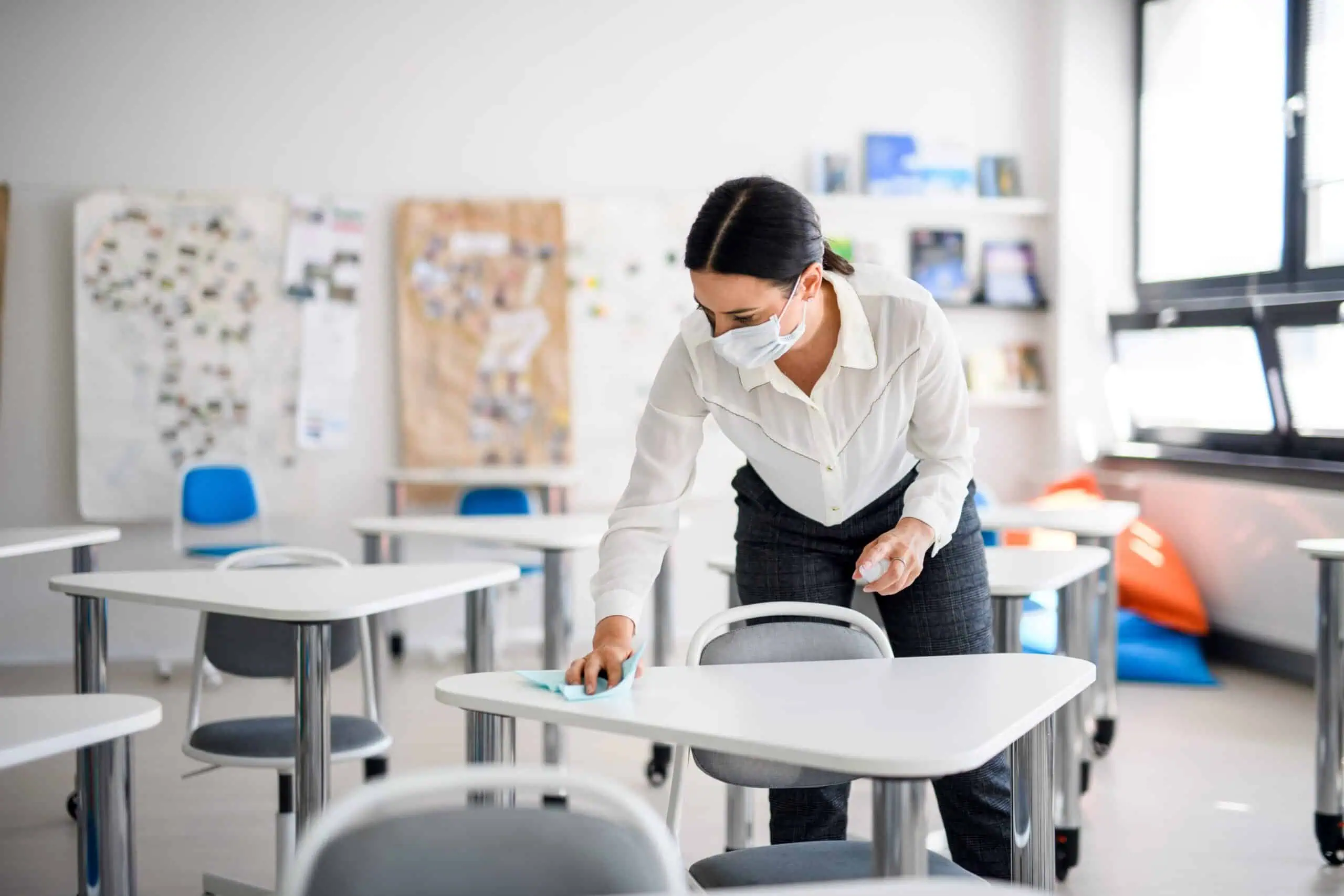
Woman wearing face mask cleaning classroom desks with cloth.

Looking for a daily cleaning programme built around your school or nursery?

At ServiceMaster Manchester, we provide daily contract cleaning to schools, nurseries and education providers across Greater Manchester, with a focus on the high-touch surfaces, washrooms and communal areas that matter most for hygiene. With over 30 years’ experience and a dedicated account management model for every client, we help education settings keep standards consistent throughout the school day, not just at the start of it.

Request a free, no-obligation quote or call 0161 905 3000 to speak to our team about a cleaning programme built around your setting.

1